
Sign Board
A sign board is a visual display (like wood, acrylic, or metal) with text or graphics used for information, branding, or direction, ranging from simple shop names and safety notices to complex, illuminated LED displays, crucial for guiding people and enhancing visibility in various environments. They come in many forms, including glow signs, digital LED boards, flex banners, and directional signs, customized for indoor or outdoor use in businesses, hospitals, roads, and events
.
Types of Sign Board
- Glow Sign Boards: Use neon or energy-efficient LEDs for bright, eye-catching illumination, often with acrylic panels.
- LED Sign Boards: Modern, digital displays for dynamic content, images, or videos, great for brand awareness.
- Flex Sign Boards: Cost-effective printed banners (vinyl/flex) for temporary or large-scale advertising.
- Directional/Wayfinding Signs: Guide visitors in malls, airports, hospitals, and offices.
- Safety Signs: Display important warnings like “No Smoking” or “Emergency Exit”.
- Pylon Signs: Large, freestanding signs for high visibility, often at entrances.
- Name Plates & Desk Signs: For personal identification in offices and homes.

Materials Used
- Acrylic (PMMA)
- ACP (Aluminum Composite Panel)
- Mild Steel (MS)
- Stainless Steel (SS)
- Vinyl/Flex
- Wood
Common Uses
- Branding: Promoting businesses, logos, and products.
- Information: Providing details in public spaces like airports and hospitals.
- Navigation: Helping people find their way.
- Advertising: Attracting customers to retail stores.
- Safety Compliance: Displaying necessary safety information
Signboards vary by purpose (Informational, Directional, Promotional, Regulatory, Wayfinding) and placement (Indoor, Outdoor, Digital), using materials like Acrylic, Metal, Wood, or Vinyl for effects like 3D lettering, backlighting, glows, or simple prints, catering to needs from building identification to guiding customers and conveying rules.
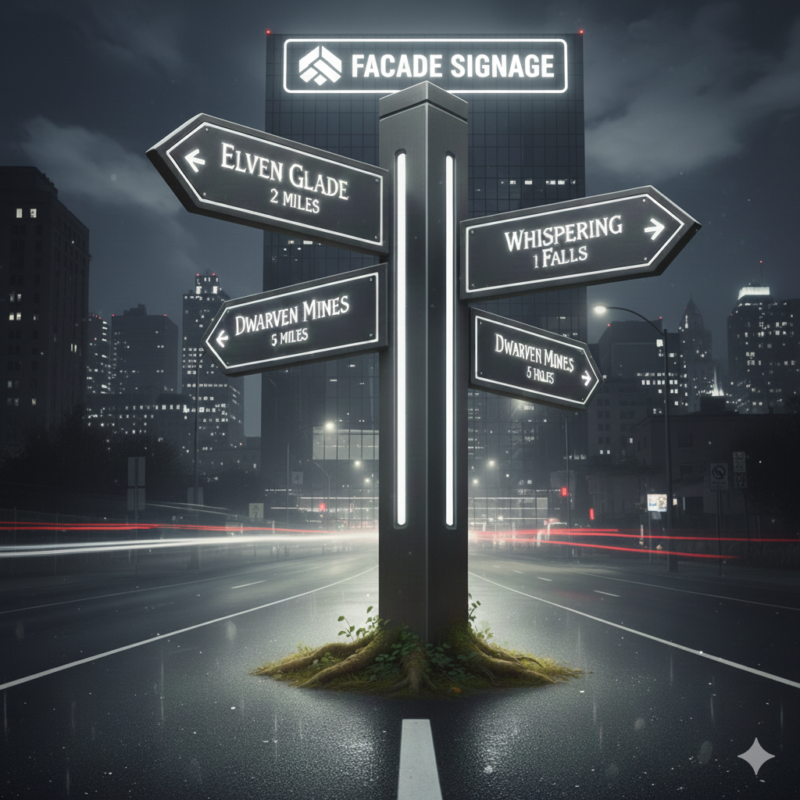
By Function/Purpose
- Informational: Hours, contact info, menus (Menu Boards, Lobby Signs).
- Directional/Wayfinding: Guides people through spaces (Directories, Floor Graphics, Exit Signs).
- Regulatory: Enforces rules (Stop Signs, No Smoking Signs, ADA Signs).
- Promotional/Advertising: Drives sales (Banners, A-Frames, Digital Displays).
- Identification: Marks buildings or businesses (Sky Signs, Pylon Signs, Logo Displays).
By Location/Type
- Indoor: Wall-mounted, Countertop, Overhead, Floor Decals, Lobby Signs.
- Outdoor: Billboards, Pylon Signs, Monument Signs, Building Facades.
- Digital: LED screens, Digital Menu Boards for dynamic content.
- Portable: Banners, A-Frames, Easels for events or temporary needs.
By Material/Style
- 3D/Dimensional Letters: Acrylic, Metal (Gold, Chrome), Crystal, often with LED backlighting.
- Flatboards: Forex, Acrylic, Corflute (Correx), Foamcore for versatile, cost-effective options.
- Glow/Neon Signs: Backlit acrylic or neon for high visibility.
- Wooden Signs: Offer a classic, rustic feel.
- Vinyl: Banners, decals, window graphics.
Specialized Types
- Braille Signs: Essential for accessibility.
- ADA Signs: Compliance with Americans with Disabilities Act.
- Pylon Signs: Tall, freestanding signs for high visibility.
why sign boards are important
are an essential part of our everyday lives. They provide information, directions, and warnings to help us navigate the world around us. Signboards come in various types, designs, and sizes, depending on their purpose and location.
Sign board are importent
Signboards acrucial for communication, guiding people (wayfinding), ensuring safety (hazards, exits), promoting businesses (visibility, branding), and regulating behavior (traffic, rules) in public spaces, workplaces, and businesses, making environments understandable, efficient, and secure. They reduce confusion, attract customers, and enforce compliance, serving as silent yet powerful visual cues for decision-making and navigation.
Key Functions of Signboards
- Guidance & Navigation: Direct people to locations like restrooms, exits, departments, or specific routes, preventing them from getting lost in large venues, campuses, or roads.
- Safety & Hazard Alerts: Warn of dangers (slippery floors, electricity), indicate emergency exits, and show locations of safety equipment (fire extinguishers, first aid), vital in workplaces and public areas.
- Marketing & Branding: Act as the first point of contact, attracting customers, building brand identity, increasing visibility, and creating a competitive advantage for businesses.
- Regulation & Compliance: Communicate rules and laws, such as speed limits, no-entry zones, parking restrictions, and mandatory actions (wearing PPE).
- Information & Communication: Convey complex information quickly and clearly, helping users make informed decisions without cognitive overload, from public announcements to internal office directions.
Where They’re Important
- Roads: Traffic signs (regulatory, warning, informational) manage flow and prevent accidents.
- Workplaces: Safety signs ensure adherence to standards, protecting employees.
- Businesses: Attract customers and build brand recognition.
- Hospitals/Malls/Campuses: Help visitors and staff navigate large, complex buildings easily.